
19 Jun Fasteners Types: How To Pick the Right Hardware
Ever stared at a hardware aisle and felt your brain short-circuit? You’re not alone. The world of fasteners is shockingly vast, with hundreds of variations engineered for specific jobs, materials, and load conditions. Whether you’re framing a deck, assembling furniture, or tackling a serious industrial build, picking the wrong fastener can mean a wobbly result or a catastrophic failure. This guide breaks down the most essential fasteners types so you can match the right hardware to the right project, every single time.
What are the different types of fasteners?
Fasteners fall into two broad categories: threaded (bolts, screws, nuts, studs) and non-threaded (rivets, pins, washers, clips, anchors). Each category branches into dozens of specialized variants engineered for specific load requirements, materials, and assembly methods across construction, automotive, and manufacturing applications.
Why Understanding Fastener Types Matters
A fastener isn’t just a piece of metal. It’s a load-bearing component that holds your project together under stress, vibration, temperature changes, and time. Choosing the wrong one can void warranties, fail inspections, or cause real damage.
Professionals know that fastener selection comes down to three big questions: What materials am I joining? What forces will act on the joint? Is the connection permanent or removable? Answer those, and you’re already ahead of most weekend warriors.
Threaded Fasteners: The Workhorses
Threaded fasteners create a mechanical bond through helical grooves. They’re the most common category and offer the major advantage of being removable, which makes maintenance and adjustments simple.
1. Bolts
Bolts pair with nuts to clamp two or more components together. They require a pre-drilled hole and are often used where high tensile strength matters.
- Hex Bolts: Six-sided heads for wrench grip, used widely in construction and machinery.
- Carriage Bolts: Smooth, rounded heads with a square neck to prevent spinning, popular for wood-to-metal joints.
- Anchor Bolts: Embedded in concrete to fasten structural elements like steel columns.
- U-Bolts: Bent into a U-shape, perfect for clamping pipes or round objects.
- Eye Bolts: Looped head for attaching ropes, cables, or chains.
2. Screws
Screws cut their own thread path or thread into an existing pre-tapped hole. Unlike bolts, screws typically don’t need a nut.
- Wood Screws: Coarse threads designed to bite into lumber.
- Machine Screws: Uniform threads for use with nuts or tapped holes in metal.
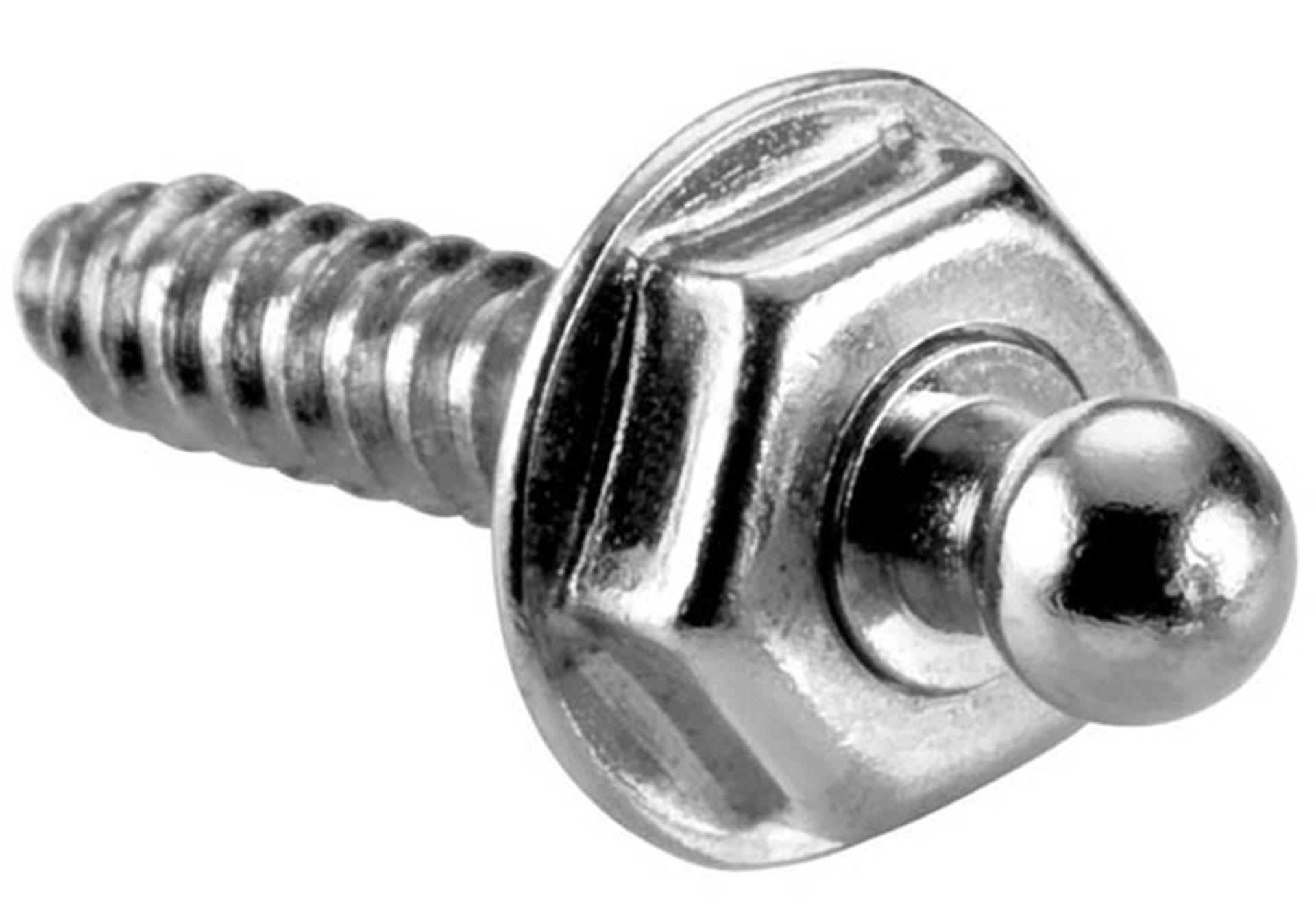
- Self-Tapping Screws: Form their own threads as they’re driven in.
- Drywall Screws: Bugle-head design that sinks flush without tearing paper.
- Deck Screws: Corrosion-resistant coatings for outdoor wood applications.
- Lag Screws: Heavy-duty wood fasteners with hex heads, used for structural connections.
3. Nuts
Nuts thread onto bolts to complete the clamping mechanism. The variety here is surprising.
- Hex Nuts: The standard six-sided staple.
- Lock Nuts: Resist loosening under vibration (nylon insert, prevailing torque, etc.).
- Wing Nuts: Hand-tightened with finger grips.
- Cap Nuts: Domed top for a finished look and to cover exposed threads.
- Coupling Nuts: Long, internally threaded to join two bolts end-to-end.
4. Washers
Washers might seem like an afterthought, but they distribute load, prevent surface damage, and lock fasteners in place.
- Flat Washers: Spread the load and protect surfaces.
- Spring Washers: Provide tension to resist loosening.
- Lock Washers: Use teeth or split design to dig in and grip.
- Fender Washers: Oversized for soft materials like sheet metal.
Non-Threaded Fasteners: The Specialists
These fasteners hold things together without spiral grooves. They’re often permanent or semi-permanent solutions.
Rivets
Permanent fasteners that work by deforming a tail to hold materials. Pop rivets (blind rivets) are common in sheet metal work, while solid rivets are still used in aircraft assembly for their unmatched durability.
Pins
Used for alignment, pivoting, or quick release. Types include cotter pins, dowel pins, clevis pins, and spring pins. Each handles specific shear loads or positioning needs.
Anchors
Engineered to grip in hollow walls, concrete, or masonry. Wedge anchors, sleeve anchors, toggle bolts, and drop-in anchors all serve unique substrate conditions.
Clips and Clamps
Used for cable management, panel retention, and hose connections. They prioritize quick assembly and reusability over raw holding strength.
Specialty Fasteners Worth Knowing
Beyond the common categories, several specialty options solve specific engineering problems.
- Threaded Inserts: Add durable threads to soft materials like plastic or wood.
- Captive Screws: Stay attached to the panel after loosening, preventing lost hardware.
- Weld Studs: Welded to a surface to provide a fixed threaded post.
- Tamper-Resistant Fasteners: Require special drivers, used in public installations and security applications.
- Sex Bolts (Barrel Nuts): Used in bookbinding and furniture for clean, two-sided finishes.
Materials and Coatings Matter
The type of fastener is only half the story. Material and finish determine how it performs in the real world.
Common Materials
- Carbon Steel: Strong and affordable, but prone to rust without coating.
- Stainless Steel: Excellent corrosion resistance for outdoor or marine use.
- Brass: Decorative and corrosion-resistant, often used in electrical and plumbing.
- Aluminum: Lightweight and rustproof, ideal for aerospace and electronics.
- Titanium: Premium strength-to-weight ratio for high-performance applications.
Common Coatings
- Zinc Plating: Affordable rust protection for indoor use.
- Hot-Dip Galvanizing: Heavy zinc coating for outdoor and marine environments.
- Black Oxide: Mild corrosion resistance with a sleek black finish.
- Ceramic Coatings: Premium protection for harsh chemical environments.
How to Choose the Right Fastener
Selecting the right fastener doesn’t require an engineering degree. Run through these five quick checks before you buy.
- Material compatibility: Avoid galvanic corrosion by matching metals when possible.
- Load type: Consider tensile, shear, and vibration loads.
- Environment: Indoor, outdoor, marine, or chemical exposure changes your coating needs.
- Removability: Permanent (rivets, welds) versus serviceable (bolts, screws).
- Aesthetics: Finished look, exposed head, or hidden fastener.
Frequently Asked Questions
What is the most common type of fastener?
Hex bolts and wood screws top the list. Hex bolts dominate construction and machinery, while wood screws are the go-to for carpentry, furniture, and DIY projects. Both balance strength, availability, and ease of use.
What’s the difference between a bolt and a screw?
A bolt is designed to pair with a nut and clamp components together, while a screw threads directly into a material (or a tapped hole) to hold it in place. In short, bolts use external clamping force, screws create their own grip.
Are stainless steel fasteners always the best choice?
Not necessarily. Stainless steel excels in corrosion resistance but costs more and is softer than hardened carbon steel. For high-strength structural loads in dry environments, coated carbon steel often outperforms stainless.
What does the grade of a bolt mean?
Grade indicates tensile strength. Higher grades (like Grade 8 or Class 10.9) handle heavier loads but can be more brittle. Lower grades are more ductile and suitable for general-purpose work. Always match the grade to the application’s load requirements.
Can I reuse fasteners?
Many fasteners can be reused, but lock nuts with nylon inserts, certain locking bolts, and torque-to-yield fasteners are typically single-use. Inspect reused hardware for thread damage, corrosion, and stretching before reinstalling.
What’s the difference between coarse and fine threads?
Coarse threads are stronger in soft materials and resist stripping, while fine threads provide better tension control and work well in harder materials. Coarse is the default for most general construction; fine threads shine in precision applications.
Final Thoughts
Mastering the world of fasteners types isn’t about memorizing every product code. It’s about understanding the logic behind each design, threaded versus non-threaded, permanent versus removable, structural versus decorative. Once you grasp how load, environment, and material drive the choice, the hardware aisle stops being overwhelming and starts feeling like a toolbox of solutions. Bookmark this guide, share it with your crew, and the next time you reach for a fastener, you’ll grab the right one with confidence.
Sorry, the comment form is closed at this time.